Wednesday, May 20, 2015

Who knew ulu?


It’s 4 pm and I’m sitting at the Kona Coffee Mill in Hawi, Hawaii, eating a macadamia ice cream.


A visitor stopped me to ask where they were serving the ice cream that they mention in the book.  I said this must be the place because the town is very small and as far as I know this is the only place that serves ice cream on the strip and I’ve heard good ice cream. Of course I was curious to try it after that. It’s very good. I like the fact that macadamias in it are grown locally. Hawi is a small town in northern Hawaii, part of the Kohala region. It’s often known as where the Ironman and trialathon turns around.

I have come from Japan where I was 13 hours ahead of you to here, and I have come here, 6 hours behind you. It seems appropriate that I am behind you because the pace seems slower more relaxed here. When I got off the airplane and walked into the terminal, despite a 24 hour travel time, with three flights and stop over time of about 10 hours in two airports, I felt immediately more relaxed and energized at the same time. I can’t explain it.

And by the time Heidi brought me to her the town that has adopted her, or she has adopted, I was feeling very relaxed and excited at the same time, not only to be with Heidi and in Hawaii, but there is a certain energy to the island and this area in particular.
It’s like mother earth embraces you here, and tells you to settle down, everything will be ok. There is so much spectacular scenery at every time, sometimes so stunning and incredible when Heidi and I would be hiking, that I had to say holy ***, sorry those were the only words I could think of and perhaps I should be more literate but the feelings were raw like the terrain.  Through mother earth’s incredible beauty, she forces you to become more present and enjoy it all, be grateful for it. 
I heard a guy talking to a visitor about some problems he is having, and at the ends he says, “but heh I live in Hawaii and the beaches where I live are often deserted and beautiful.” I hear others say that they wake up every morning grateful to have another day in such a beautiful location on this planet. I am certainly grateful for the time I am spending here.
I had a long stopover in Waikiki and while beautiful as I walked the beach area and laid in the sun, I felt it was too crowded and touristy for me. I felt I hadn’t left Japan, just the back drop had changed. There were so many Japanese tourists, almost everything was written in Japanese as well as English, and sometimes only in Japanese, and there was the Japanese food and snacks all over that I was familiar with in Japan like snack packs of sushi and noodles, not that I am complaining, just observing.
So coming to Kona and then to Hawi feels more “Hawaiian”, more local, more real. It feels like I am peeling a fruit, layer by layer, and now I am inside where the seeds are like a papaya. I am thinking in fruit because there is so much fruit here that is grown locally that I am familiar with, however I am not, because there is nothing like tasting something that has been grown locally and just picked.
And the new produce I am being introduced to, are like new crushes. Where have you been all my life?  How can I get to know you better? Heidi said I would love ulu, especially done as a bread/cake, and she was right. The whole ulu can be put in the oven and when it’s ready, they open it up like bread! Thus the alternate name breadfruit. How great is that? Now we are both in love with the same fruit! But there is room, because there is a lot of ulu. Who knew about ulu?
I’ve also come to have a crush on lilikoi or yellow passion fruit that seems to make its way into a lot of food products from jams and ice creams to desserts. You eat the fruit by cutting a whole at the top and sucking out the seeds and pulp or cutting it in half and scooping out the seeds and pulp. You normally don’t eat the rest.
This morning we had a freshly baked cinnamon bun with lilikoi glaze at the Nanbu Coutyard café  on our way home from what is becoming our daily sunrise beach play time. Delish! The café is only open from 7 am – 2 pm and the owner is a third generation Japanese, like me. She makes everything from scratch from early in the morning. There is a beautiful courtyard as part of the café that looks like a perfect place to relax.   


When I came to the island, I felt like I was out of step with the energy of the island. The best way I can describe it is like I was a square peg trying to fit inside a round hole.  I feel that I have spent so much time being the best and right peg, in order to fit in. But here you don’t need to be a round peg or even a peg, you can be who you are.
Did you know that there are 250 varieties of mango? Who knew? At home, most of the time it’s hard to find more than two varieties and the big criteria is often how ripe they are.

That’s what I love about travelling, it challenges all my preconceived assumptions and expectations about everything, including fruits and life.  And sometimes turning your world upside down is a good thing.


Sunday, May 17, 2015

Naked in Japan

If you want a truly Japanese experience, there is no better place than an onsen or mineral hot springs. In Japan, bathing or cleaning is done before you enter the waters, because once you enter, it is for relaxation and rejuvenation. It is the same for taking a bath in Japan.

I don’t think the onsen has changed much over the years except for more automation and some English where there are tourists like at the large Tokyo one called Oedo Onsen.
www.ooedoonsen.jp/en/top/ I went to with Yuki and her sister’s family.

 Here were the basic steps and rules at this onsen, and this may differ at other places, but it is basically the same approach and may help if you go to one. I had no idea before I went how many rules there are, written and unwritten.  

The guide to a good onsen experience…
1.Take off your shoes. You must lock up your shoes and you take your key

2. Register. At the Tokyo onsen you get a wrist band so that you don’t have to take your wallet. You can buy what you need through the band, whether food, drink or massage, and it’s added to your bill.

3. No tattoos. There are signs everywhere that say you can’t go in with a tattoo and they will actually refuse you entry if you tell them you have one. This is a rule I believe that was created initially to not let in yakuza, organized crime members, who are usually covered in tattoos. Saying that no tattoos were allowed, would prevent them from coming in. If you have a minor tattoo or tattoos that are small then you might want to consider covering them up with a band aid or tensor band aid or other as some friends I know do. Otherwise it’s pretty black and white in Japan and you won’t get in.

4. Yukata. You get to select what coloured pattern you want for your cloth yukata (lightweight kimono) and obi (sash). The men have little or no choice for their yukata.
 
5. Second locker. This is where you leave your belongings and put on your yukata and obi. Remember, left over right fabric for putting on the yukata, the other way means death. Make a bow or knot with the obi and put it at the back or side.

6. Third locker.This is where you get a large and small towel and a key to another locker. Yes, there are a lot of lockers!

7. Get naked. This is where you must get naked. You are not allowed to wear your yukata to the baths or bring anything with you except for the small towel. You can use the small towel over your private parts if you’d like but I think that looks a bit ridiculous like one of those British comedy shows where someone gets caught naked and tries to cover up quickly. Many use the towel on their heads when they are in the onsen. It’s interesting that the Japanese people seem shy to us, however they are not shy about getting naked in public so to speak. I guess we all have things that we are shy and awkward about.

8. Get clean. There are small wooden stools, each with a shower area. You are supposed to clean before the baths or at least put some water over you with a small wooden container in a common place that is usually just before the onsen area. When we went to the Hakone onsen, about an hour outside of Tokyo, I asked Yuki why there was water covering the stones in the front entrance. Perhaps they were cleaning it? She said they pour water at the entrance as a sign of welcome to guests. Her mother used to do it when she was growing up. Before she had guests, she would pour water at the entrance way as a sign of welcome.

9. Onsen time! When you finally get to the onsen, it is lovely, peaceful and relaxing, though there were about 100 women scattered throughout the different sized pools of varying forms from metal to rock to wooden tub and of varying temperatures, warm to hot, inside and out. Sometimes there is a cold pool. I don’t know about the one in Tokyo because I didn’t search out the cold one. There was something so ancient and timeless about the scene. There were some pools with jets like a hot tub, others with special salts and minerals.  My friend Jacob went to an onsen in Kyoto, touched the wall and got an electric shock. He was surprised and thought he should alert someone to this dangerous situation, until he realized that this was on purpose and people were putting body parts in there as they believe this to be good for they system!

10.  Eat! At the Tokyo onsen, there is a big marketplace like an amusement park with games for the kids, restaurants and take out counters. When we started getting hungry, we changed back into our yukatas and went into the marketplace. It was strange to be in a space with hundreds of people wearing similar clothing and having nothing else. It was like a scene from an old samurai movie or ancient woodblock print. I got used to it quickly and loved it. It was freeing not to worry about what to wear and not carrying money or any possessions.

I noticed a few differences from this kind of experience in Japan vs. if it was held in North America. First of all, there is a lot of great home style cooking at reasonable prices, from tempura and curry, to ramen and sushi. Second, there is a mix of generations sitting together and close to one another in the same space. I noticed that there is still a lot of respect and care for elders here, and I love this, especially as I get older :). It is a culture that is not just focused on the young and staying youthful, which seems like the primary goal of our North American existence if you listen to the ads.


11.  Foot baths. After our meal, we went to the foot baths, which is a beautiful Japanese garden setting outside with warm ponds that you can dangle your feet in. There are also stones you can walk on.  I tried it, but it there were too painful for me, something I will have to build up to I guess. Yuki's niece wanted to try to soak her feet in the special pond called Doctor Fish where tiny fish come to your feet to clean them of dead skin cells and other nasty bits. This is in a special area that you have to pay for and her father took her.

It was a lovely warm evening, and we sat under the moonlight in our yukatas, this time both men and women are allowed in the same area, and time seemed to stand still. I could understand why this has been part of the Japanese culture for hundreds of years and I hope it stays that way. The bathing experience provides self-care and calm in an increasingly crazy busy world that we live in and it creates the opportunity to pause and reflect, unconnecting technically, but connecting to one another and more importantly to ourselves.


Saturday, May 16, 2015

Tea in Tahara

Sometimes food is more than food, and tea is more than tea. When it is created by love, there is magic and power in it. 


I experienced this in Tahara city, a rural community with a lot of farms, population of about 63,000. I was there to visit my friend Noriko who stayed with us when she was in Ottawa studying English. She brought so much into my life in Ottawa, and she was a good cook as well. She helped me with some of the cooking for ZenKitchen pop-up dinners, we worked together to make an elaborate Japanese New Year’s celebration breakfast for my friends, and she would often have a Japanese dinner ready for us when we got home from work. :)

Noriko took me to see the ocean, a 20 minute drive from her hometown, and we walked along the beach. We were the only ones. It was a hot and humid day but also windy, overcast and foggy so you couldn’t see the beautiful mountains or much of the ocean. However, I love the ocean and it was beautiful to walk along the beach, with the high winds and the waves crashing, and the surfers out enjoying this. At the end of our walk, I noticed a building near the parking lot. She said it was a store with local food products and did I want to go in?  What a funny person she is!


The Tahara city area is in the Aichi prefecture, which is surrounded by mountains and the ocean, and the landscape is filled with farms and rice fields. This results in an abundance of local produce and food products. In Tokyo and Osaka, I hadn’t seen a lot of fruit that was accessible, meaning that it was usually quite expensive and all wrapped up carefully in plastic in tiny portions. The vegetables were more accessible but I stuck to the Japanese vegetables like mizuna, daikon and Japanese mushrooms that seemed fresher and cheaper.  
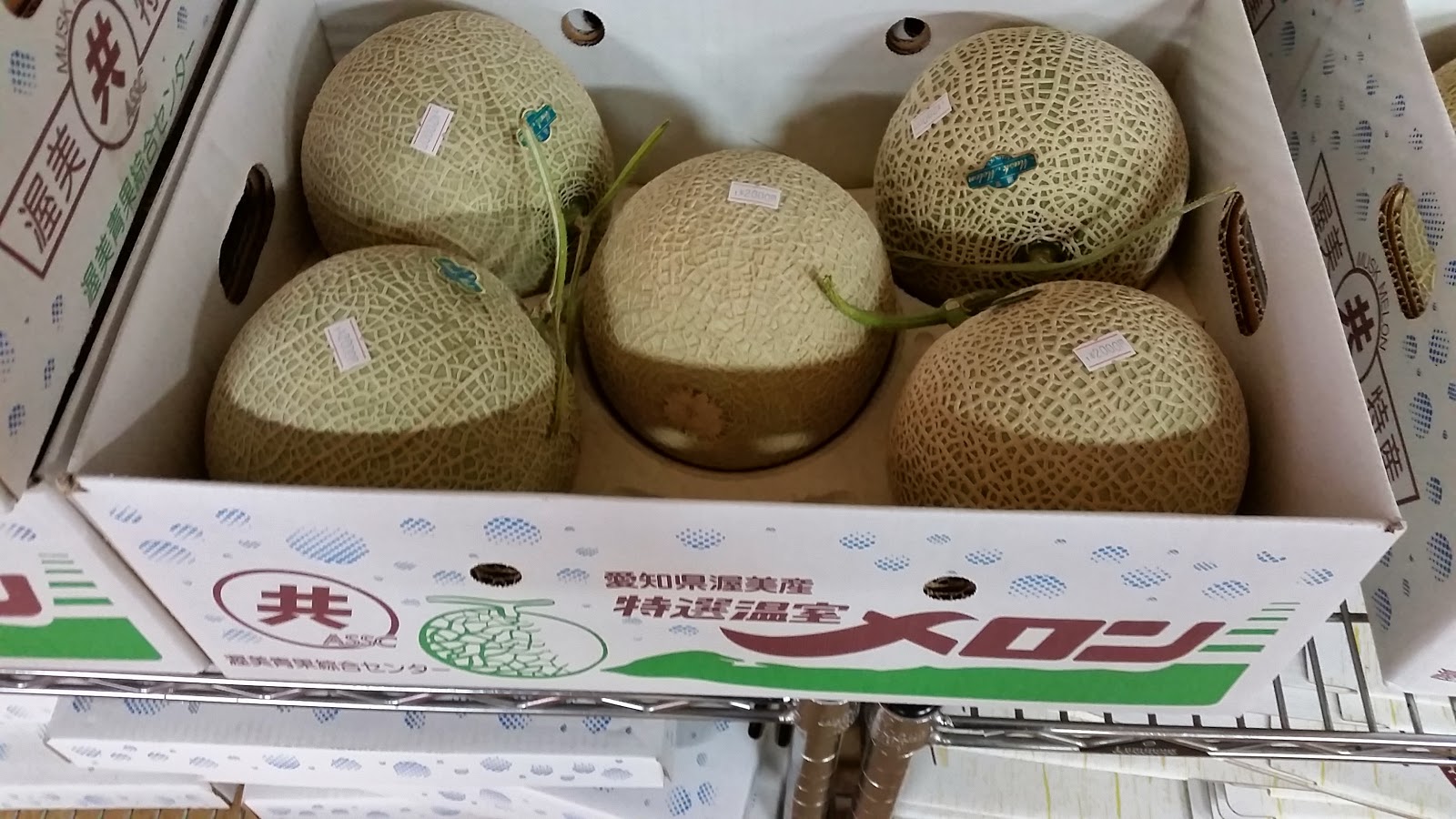
In the store at the beach, the produce from local farms was plentiful, fresh, and seemed reasonably priced compared to Canadian prices.There was produce that we are more used to at home such as local tomatoes, lettuce, cabbage, potatoes, and eggplants, along with some Japanese vegetables. There was also a special Musk melon that the region produces and sells for about 2,200 yen or $22 US each. Most fruit continues to be expensive in Japan, especially melons, which most Japanese love.


local agar agar


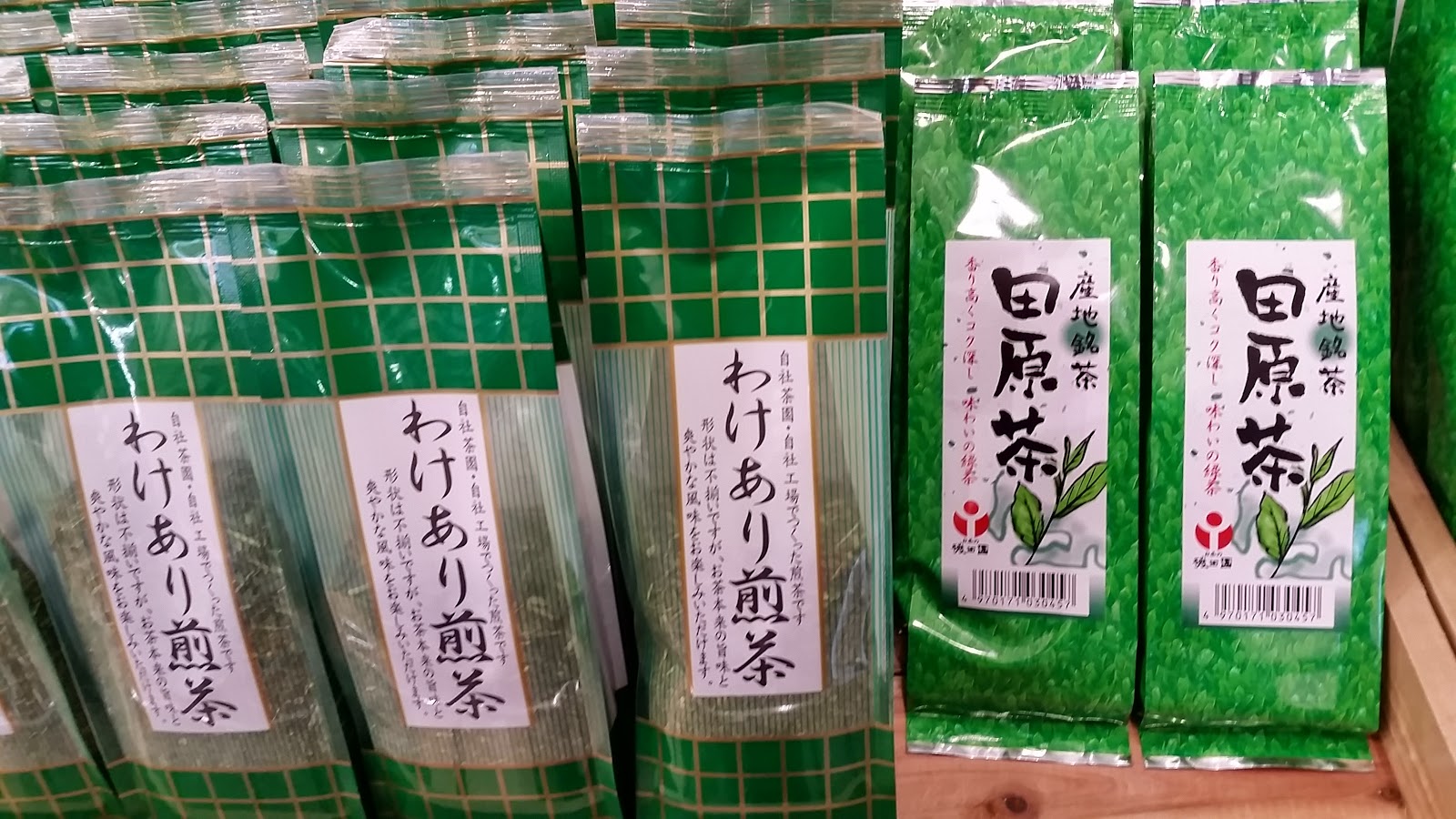
There are also special products the region makes, including miso, every region seems to have a different kind of miso they make and theirs is very dark almost like hatcho, wakame, oil, agar agar, rice and green tea.
When we arrived back home, Noriko said that her father wanted to have us over for a matcha tea ceremony without the ceremony. Apparently he had studied tea ceremony a long time before he got married and since Noriko was a child he has enjoyed making matcha tea for her family in a more casual manner. Her father and mother were babysitting her sister’s two children, two and four, and they were excited to be participating in tea ceremony.

I was surprised at first, “isn’t the tea too strong for them?” I asked. Noriko said they make it weak for them. I guess it’s the same as having a tea party when I was a young girl, but this one is real, and no wonder the girls love it. I loved the ceremony without the structure, and perhaps those who are reading this who have studied Japanese tea ceremony for a long time might cringe at the lack of formality. I think it’s a great way to introduce children to the joy of sharing and drinking tea, with all the proper customs associated with it. It’s the same way with cooking.I feel introducing it in a fun, simple way to children would go a long way from them not being afraid or hesitant to cook when they are older.

First the presentation of the sweets

 
Eating dango, rice dumplings

 
Eating yokan, sweet red bean

 
Tea service and bowing in acceptance and gratitude, at 2 years
The tea ceremony started with sweets, including yokan (red bean cake) and dango (rice flour dumplings with soy glaze), which I adore, and apparently so do the kids. They ate the sweets in the usual excited manner that kids do but also with restraint to, sitting properly, eating it in small bites with a special bamboo toothpick you are given, putting it down between bites on the delicate rice papers you are given. We didn’t even do that when we had wagashi at the tea ceremony with Fumiko the other day and were embarrassed when we noticed how everyone ate after we gulped down our wagashi. Everyone, including the man, had broken the wagashi cake in half with the toothpick and had eaten it slowly, keeping the other half on top of the rice paper, to be eaten later. Well, the two year old did this, albeit a bit clumsily and awkwardly, as she is two after all.
 
One at a time, the father would prepare the matcha tea expertly in the large clay bowls with the bamboo whisk, and the mother would bring it to one of us in the living room. I loved the two year old as she participated in the ceremony, bowing first with her grandmother mother and saying the appropriate words of appreciation and respect, and then drinking the tea from the bowl in the way she was taught. It was too adorable!

After we had our teas, the father asked if I wanted to learn how to make matcha. He gave me pointers on the making of it, serving of it, and drinking of it, which was fascinating for me. He was so kind, patient and passionate about making and sharing tea.
 
I will remember forever the tea in Tahara city because it was more than tea. It was an act of generousity and love from Noriko’s father to his family and their guest. Lucky me!


Friday, May 15, 2015

Hale vegan in Kyoto

We went to the most amazing lunch at Hale, an organic vegetarian restaurant in the Nishiki market of Kyoto. Nishiki market is a must visit in itself. It is where the chefs shop for special ingredients for their intricate Kyoto cuisine. We met Chiharu, chef-owner, at a tea ceremony class with Fumiko the day before and I wanted to visit her restaurant, especially when Fumiko said it is mostly vegan and focuses on using organic local seasonal ingredients.

Chiharu opened up the restaurant about 10 years ago. It used to be the house of her grandmother, which she transformed into a restaurant with about 12 seats on the first floor. It is well hidden down a thin alleyway in the market and if Fumiko hadn't led us there we may have not found it, and that would have been a shame because it's amazing.


When you enter the restaurant, you immediately feel at home, because after all it is an ancient home with a lot history, and then there is a small beautiful Japanese garden that we were told is common for these type of houses. Chiharu had a dream to open up a restaurant and she has done it, and done it well in my opinion.

We chose from two set menus, both organic vegan, and we ordered potato sochu, beer and a house made ginger grapefruit drink to accompany it. The food when it came out was wonderful, not only in presentation, but with every taste you feel the care and love that went into it, and in that alone, I felt at home and I had found a kindred spirit.


There were so many interesting tastes and textures, from a yuba mushroom rice bowl as the main dish, a beautiful array of local steamed vegetables with dressings, and a variety of accompaniments, including house pickles, chilled soft tofu, marinated and seasoned Kyoto seasonal offerings creatively prepared, fu (wheat gluten), which is another local specialty that has become a favourite of mine next to yuba (bean curd skin), kumquats and smoked tea.

There must have been around 100 touches to each tray and my confirmed carnivore friends shared in the delight of the presentation and offerings. I even transformed my friend Michael to liking tofu after having him try so many versions of artisanal freshly made tofu while in Kyoto. The care and presentation of artisanal tofu is much like cheese in places like Kyoto, in the way that the tofu makers prepare it daily using ancient techniques. I feel it is a shame that the only exposure most North Americans get to tofu is the packages of tofu that are often hard, dry and tasteless, because it can be and is much more than this.

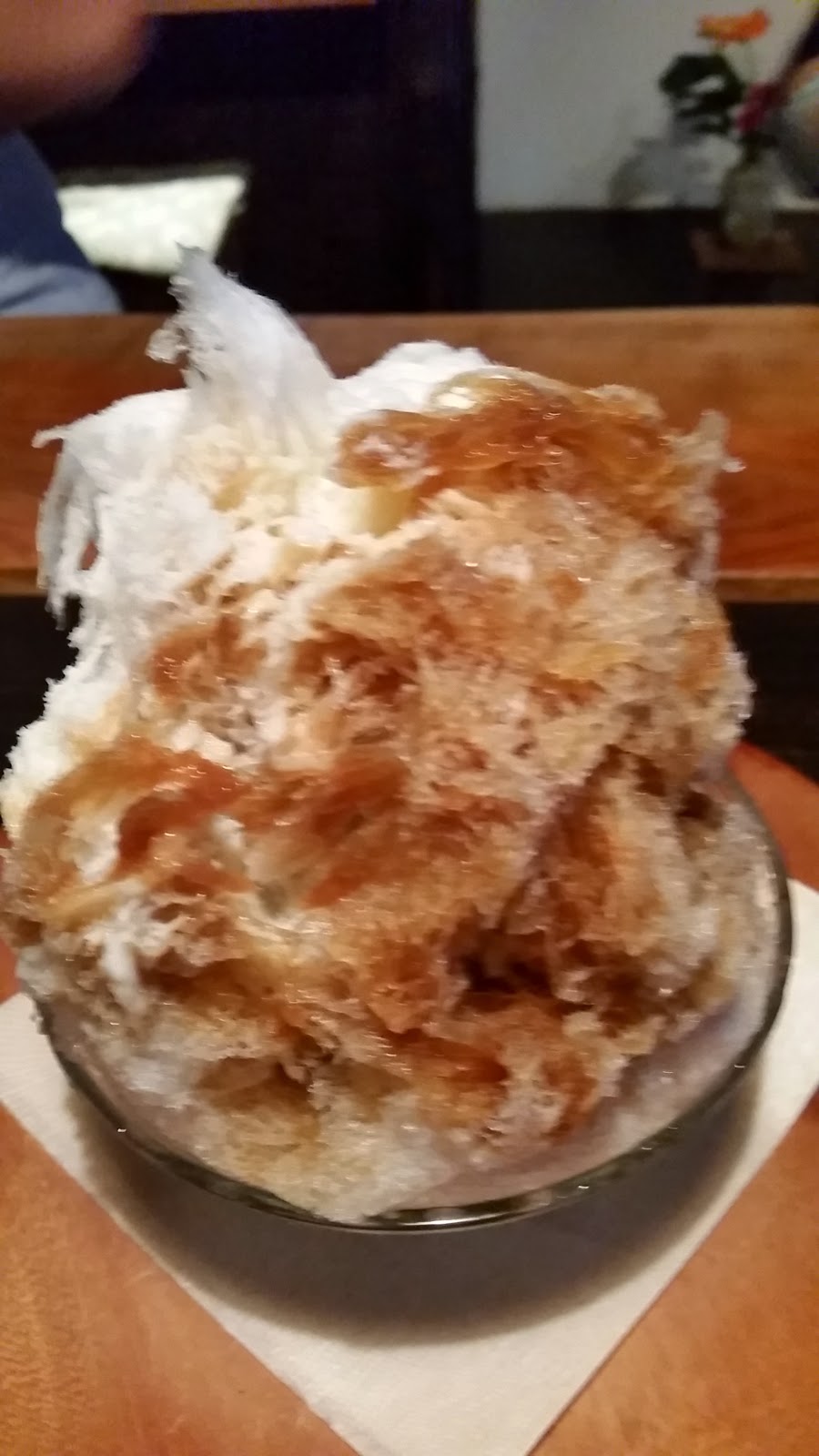
There was only one dessert offering and one that I adore... kakikori, ice shavings. But at Hale, they make a special kakikori with house made syrups. It was a real treat in the way they freshly prepared each one to order, almost like a granite but lighter and flufflier. They had us eat one quickly before it melted and the other one would come out shortly afterwards. We chose umeboshi plum, strawberry, Japanese brown sugar and adzuki, we loved all of them but the last was the group favourite. A fun finish to a meal, and if you know me, I love food that is delicious as well as being playful.


Dessert

If you find yourself in Kyoto, I highly recommend you visit Hale, whether you are vegan or not. Chiharu means sunny weather in Japanese and Hale in Hawaiian means house of the sun. I'm sure your visit will bring sunshine to your heart and palate, and that is the incredible power of food from the heart or kokoro in Japanese.

Me kidding around with the talented chefs of Hale, how strange of me :)

Thursday, May 14, 2015

Life at first sight

May 13, 2015


I arrived in Kyoto last night during the threat of a typhoon. It was raining hard, the winds were blowing heavily, and the streets were filled with people and their big umbrellas. I fell in the love at first sight. The city was charming. We arrived at Kyoto Central Station and it is filled with foods of all kinds that I love, waiting for me.
 
We went to the place that we rented and it is a very old traditional house with modern conveniences. When we entered the house, there was gravel and stones entryway that we all said "ahhh" to because it was so simple, so beautiful, so Japanese. Of course, we're in Japan you might say, but they say Kyoto is the Japan that people have images of when they think of Japan.  We would find this would be true as we walked down cobblestone alleys in the old city with ancient wooden buildings, lanterns lit, and the occasional woman in kimono walking by quickly and gracefully.


One of the most beautiful Starbuck patios...

There was stillness in the night with the rain and the threat of a typhoon coming but I got the feeling that there is a stillness that is always there despite the storm and all the tourists that visit, and there are over 50 million visitors to Kyoto yearly!
 
In Tokyo, there was not stillness as this is truly the city that never sleeps. However, I found there to be incredible mindfulness and patience of individuals toward others despite being in a city of over 20 million. Very rarely do you see people rushing or being impatient, pushing or crowding, in fact they often encourage you to go first. I had to catch myself when I would be rushing to catch the train or be doing something in a non mindful manner. I would watch others around me and slow down or take the time to put away things carefully and neatly. I was becoming more Japanese.
 
Today the typhoon warning was lifted and it was warm sunny day. We walked through the city and my friend Fumiko invited us to go to her tea ceremony class. There are so many classes offered in traditional arts and culture in Kyoto and Fumiko has been going to the same teacher for some 10 years. She loves going to her because she is an expert and so kind in her nature. Besides tea ceremony, she takes classes in putting on a kimono and another in making of a kimono. There seems to be a lot of classes here to take, my kind of place!
 
On our way to the tea ceremony class...


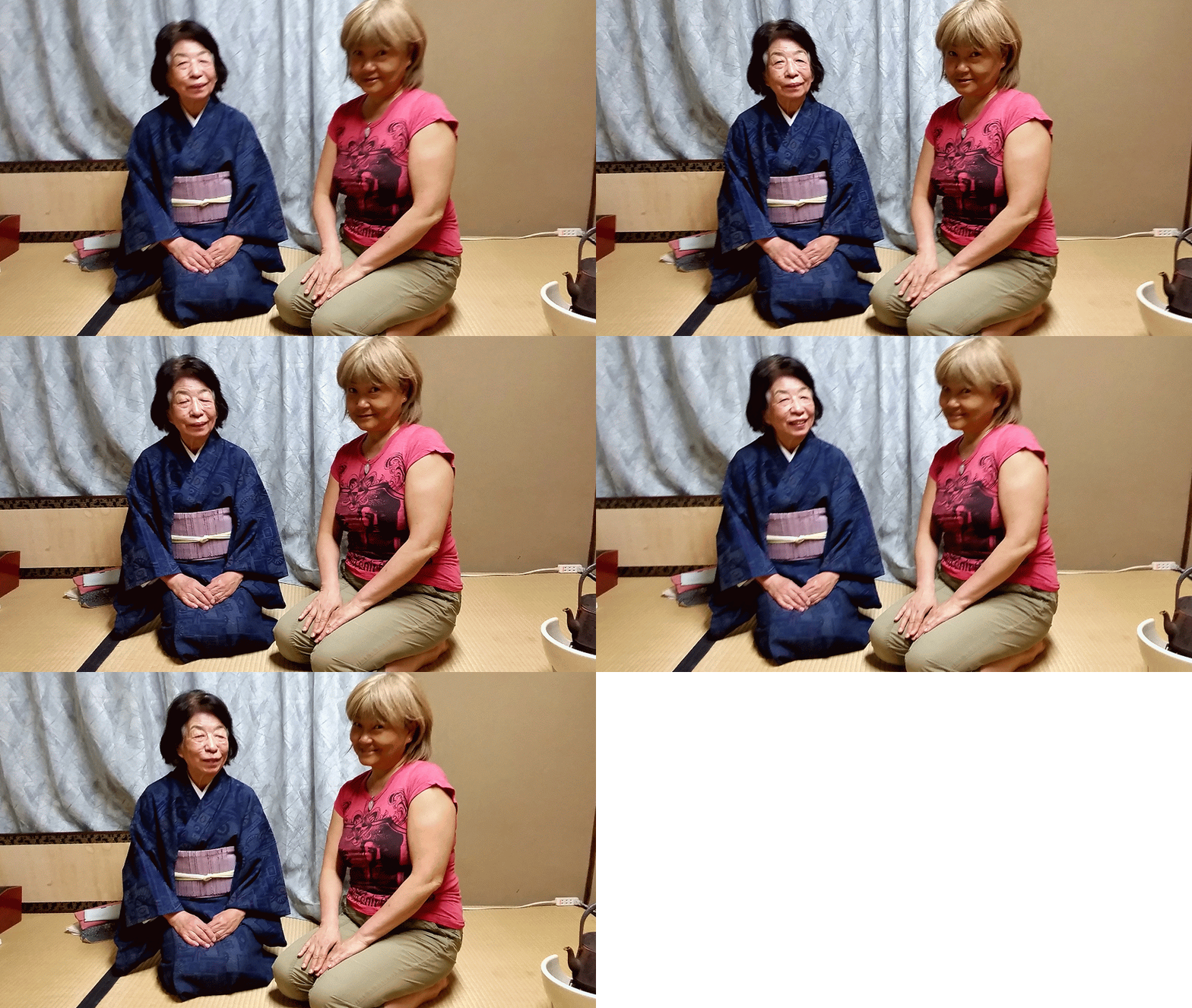
We were honoured to be invited into the tatami room in a house to watch Fumiko perform one of many approaches to tea ceremony she has learned over the years, under the guidance of her teacher who would make gentle gestures or say a few words if she would forget something. We started with wagashi, sweets, before each taking our turn at drinking the matcha tea she made for us so carefully. Afterwards, two more students came to practice, another  young woman and man.
 
Wagashi sweets to counter the bitterness of the matcha...


We were interested in watching the young man practice such a careful and delicate art form that you would think only the women would be interested in, from our North American perspective. It was also interesting to find out that the two students are both chefs in the city, one the chef-owner of a vegetarian restaurant in Kyoto that we will try tomorrow.
 

In my travels, it never ceases to amaze me how many interesting people that I meet and that cross my path. And through this, I have realized that sometimes instead of waiting for opportunities to come to me, I have to go out into the world so they can find me.


Monday, May 11, 2015

I think I'm turning Japanese

It’s May 11 and over two weeks since I have been in Tokyo. I am sitting in one of my favourite Starbucks in the hood, and someone said there are more Starbucks than noodle houses and I would have to agree. Like back home, it’s a common meeting place and there is free Wi-Fi, which is often hard to get in the city and not a given in one of the most connected cities in the world.


How do I feel after two weeks? I am turning Japanese, I really think so. And this is not just because I am consuming an incredible amount of Japanese food into my body and am immersed in Japanese life, but this is part of it. The thing is that I feel that I have had a long hunger for this food, and I can’t stop eating it or thinking about it.  The more I eat, the more I want. I believe this is because it goes beyond to feeding my hunger, it feeds my soul. Japanese is my soul food.
I am fascinated by how food can trigger memories that lay on the surface and deep down below the surface. Being here and seeing, smelling and tasting an incredible array of Japanese cuisine, brings back fond memories of growing up with this type of food when I was a child and reminds me of my mother who adored Japanese food. While she passed away over 25 years ago, it’s almost like she is here with me and I can hear her voice, encouraging me to try something because it’s oishii (tasty) or to be sure to buy this or that because you can’t get it at home.

Beyond nourishing me, the food here comforts me, makes me happy, and makes me feel like I am home and I don’t mean in a physical way because I have been in Canada all of my life. Being in Japan, reminds me where my roots come from and how deep they go. I feel I have some sort of connection here to the people. Of course you do you may be thinking because I look Japanese. It’s more complicated than that. While I know I have features that look like the people here and can understand them in some ways, I also feel like an impostor and I am not like them.
I am a third-generation Japanese Canadian and because my grandfather made the bold move to come over to Canada from Kobe to BC in the early 1900s, I am Canadian first and foremost. My first language is English and competing for second place is French and Japanese.

So where do I stand you may wonder being Japanese-looking but with blondish hair. Last time I came to Japan, I melded in much more and this time people don’t know what I am and give me a curious look at times. I guess their first reaction is to consider me a foreigner than one of them and that is probably more accurate as I am somewhere between the two. I  can understand Japanese about 75% and can speak it about 50%, thanks to my mom who put me through Japanese language school, took me to Japan and spoke to me in Japanese when I was a child, especially when she was angry.

When I was a child, I desperately wanted to fit into the classroom and didn’t want to be different so I thought I was being cool by replying back in English to my mom. However, this leaves me today being a bit stuck when I need to speak Japanese as the words are in my mind but don't come out of my mouth very easily. But with each taste of Japanese food and life, the words are coming out more and more easily, and I am turning Japanese.


Saturday, May 9, 2015

Zen moment

Meditation here this morning in the middle of Tokyo

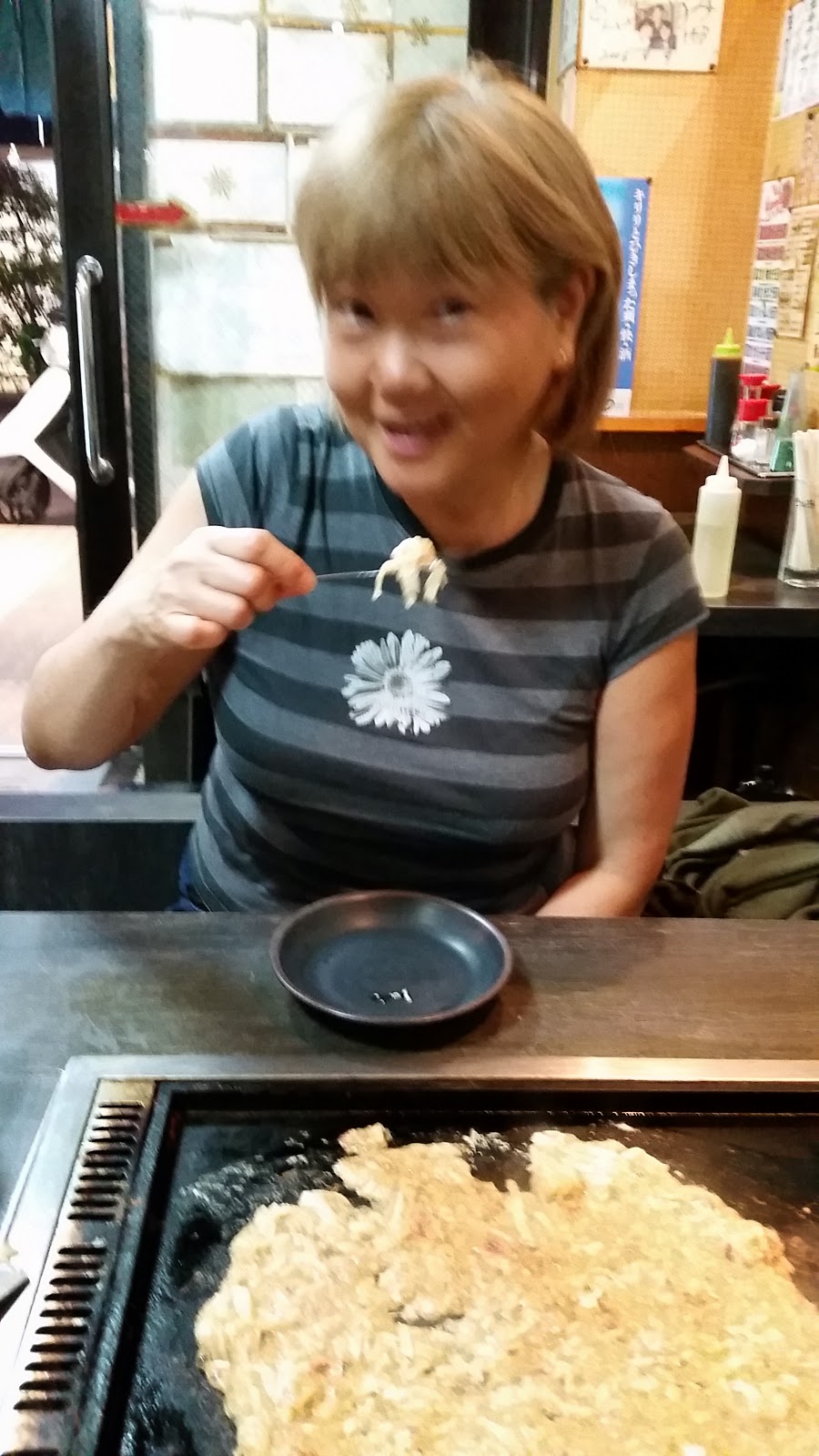
Food is love = monja

 
May 7, 2015
  
My friend Makiko asked me what I wanted to eat in Tokyo. I have eaten so much and there is much more I want to eat, but the first thing that popped in my mind was okonomiyaki! I loved eating it with Yuki when I was last in Tokyo and have never forgotten about it and the experience. Every city has their own version of okonomiyaki, including Tokyo, and there is even a certain area of town where you go eat it called Tskukishima. 
 
We arrived in the area, filled with ancient restaurants that haven't changed much over the years except for the exterior neon signs and found the same restaurant that Yuki and I had went to last time and loved. When we sat down, Makiko asked hesitantly if I wanted to try monja. You can order okonomiyaki or monja. I said nanedemo suki (I love everything) namedemo tabemasu (I eat everything). She cocked her head in the way that the Japanese do when trying to making a decision and say nan de and/or make sounds as they are concerned what to do and they don't want to offend you by making the wrong decision. 

She made the courageous decision to let me try monja. You see, the Japanese are a bit shy about letting foreigners try things like monja because it's not pretty like the usual Japanese food, actually quite ugly looking, it's gooey, and from their experience either people love or hate it, and they would hate to offend anyone. 

Okonomiyaki is often referred to as similar to a pancake or pizza, but it is much different. It's made with flour, nagaimono (mountain yam), dashi, eggs, cabbage and a variety of ingredients that you can pick from. Monja has more liquid and is a runnier version of this.

Monja is only made in Tokyo and those who love it, really love it. I really loved it and now I am now a full fledged monja addict! We had our monja with mochi, and being a mochi addict already, I was jumping in excitement!
 
We started the meal off with ramune, which I loved from my childhood visits to Japan with my mother.It's a bubbly Japanese lemonade in a stylish glass bottle that is pressurized with a marble. I think that is so cool!

At the restaurant where we were at, there is a grill at each table and the server makes it for you or starts you off. You use a mini metal lifter to eat monja right off of the grill. It's gooey like cheese and the toasty brown bits formed from cooking are prized. 

Afterwards, we had okonomiyaki and it was good but seemed tame in comparison.The Tokyo style looks more like a pancake-pizza. There is a sauce that is put over it (like a sweet thick worchestire sauce), in addition to aonori (seaweed), katsuoboshi (bonito) and Japanese mayo. You slice it into sections to eat. Both monja and okonomiyaki are meant to be shared and it's more fun that way anyway. Food and fun, my favourite combination!